
Whether you run a local company in Sarajevo or you are bringing a product into the Bosnian market from abroad, the first paid-media question is almost always the same: do we start with Google or with Facebook and Instagram?
The answer is not a matter of preference. It comes down to one thing: are people already looking for what you sell, or do you need to make them want it? This guide shows how to make that call, how to split a first budget, and what to measure so that after a month you know whether the money is working.
The core difference: intent vs discovery
Google Ads captures existing demand
Someone typing "AC repair Sarajevo" or "accountant for a limited company" already has a problem and is looking for a solution. Google Ads puts you in front of them at that exact moment. You pay for the click of a person who has declared their intent.
That makes Google the channel closest to the purchase. It also has a hard ceiling: you cannot buy more searches than people actually make. In a market the size of Bosnia and Herzegovina, some niches simply have low search volume. If nobody searches for your product, Google has no one to sell it to.
Meta ads create demand
Facebook and Instagram work the other way round. Nobody opens Instagram planning to buy herbal tea or book a holiday, but show them the right video at the right moment and they can become a customer. Meta targets people by interests, behaviour, location and similarity to your existing buyers.
Reach is broad, intent is lower. That is why creative carries the campaign on Meta. A mediocre Google ad can still earn a click because the person is searching for exactly that. A mediocre Instagram ad gets scrolled past.
The short version: Google answers a question, Meta asks one.
Which industries fit which channel
| Factor | Google Ads | Meta (Facebook and Instagram) |
|---|---|---|
| Type of demand | Existing, people actively search | Latent, needs to be triggered |
| Best for | On-demand services, B2B, urgent needs | Visual products, new brands, lifestyle |
| Typical sectors | Repairs, healthcare, legal and accounting, car rental | E-commerce, beauty, tourism, real estate, hospitality |
| Key asset | Keywords and a strong landing page | Creative and video |
| Speed of first results | Fast, if demand exists | Depends on creative testing |
| Main risk | Expensive clicks in competitive niches | Reach without sales if the offer is unclear |
Start with Google when
- People already search for your service category, even if they do not know your name.
- You sell something bought at the point of need: plumbing, dental care, servicing, transport.
- You are B2B and buyers search for suppliers when a concrete requirement appears.
- Your website converts visits into enquiries. Google sends people to a page, and a weak page eats the budget.
Start with Meta when
- You are launching a brand or product whose name nobody searches for yet.
- The product sells visually: food, cosmetics, interiors, travel, property.
- The price point allows an impulse purchase.
- You target a local community. Bosnian cities are compact, and Meta can cover a city's entire target audience without much difficulty.
Example 1: Deltron, two channels, one goal
For Deltron we ran both channels at the same time. The offline side was tangible: more than 100 partner vehicles were branded across Bosnia and Herzegovina. The digital side on Google and Meta delivered 2.97 million impressions and 22,101 clicks in six weeks in 2025.
The lesson is not that one channel beat the other. When a brand also has physical visibility on the streets, combining channels makes sense: Meta builds recognition and reach, while Google catches the people who saw the brand somewhere and then looked it up. The channels do not compete; they hand the customer to each other.
Example 2: Herbisa, a new brand from zero
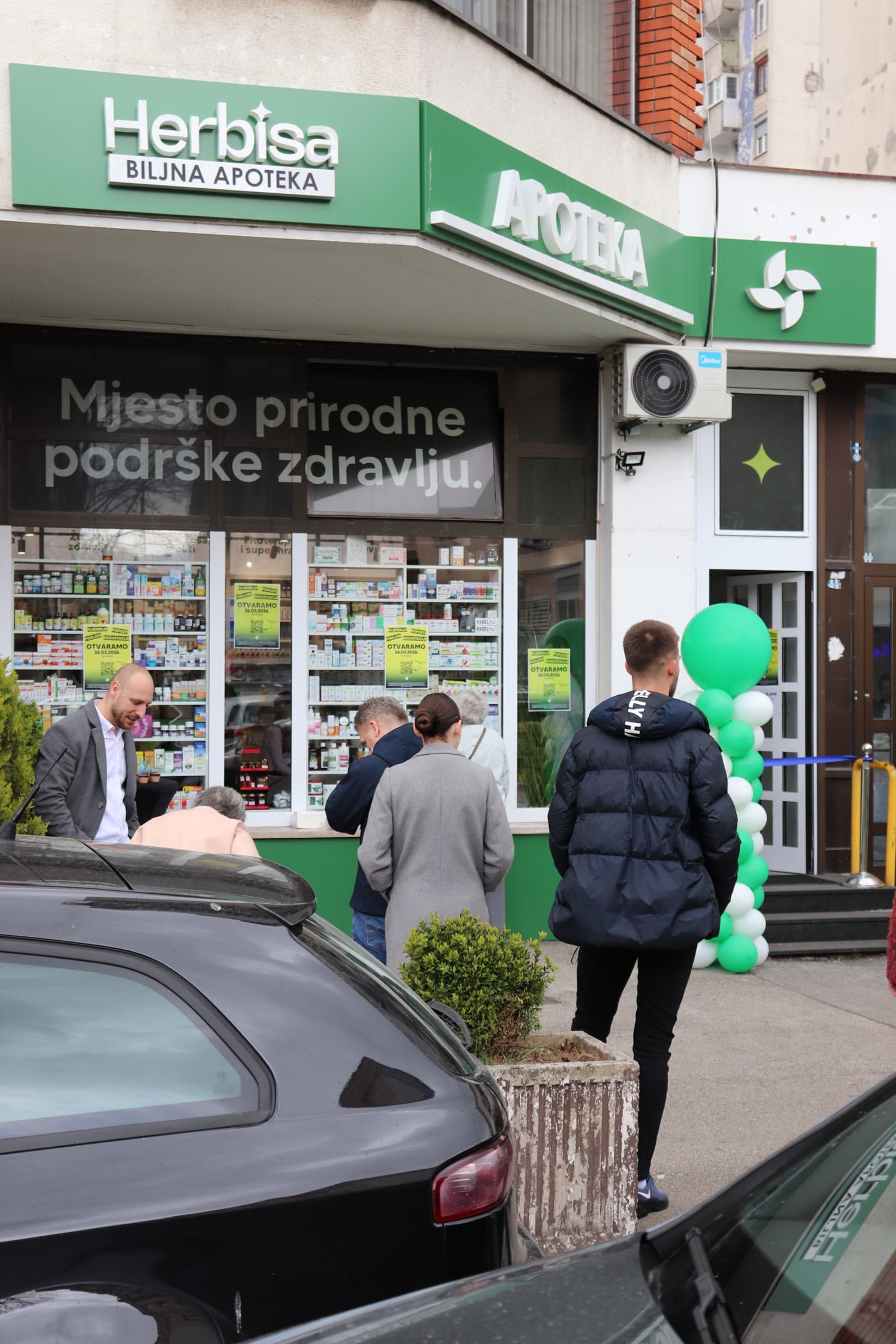
Herbisa is a herbal pharmacy that opened in March 2026. At launch nobody was searching for its name, so branded search demand was essentially zero. That is why the sequence did not start with ads but with foundations: a full brand book, a web shop and automated emails.
Only once those were in place did the ads have somewhere worth sending people. The result: more than 200 online orders and over 20,000 KM (roughly 10,000 euros) in revenue every month through ads, and an Instagram account that grew from zero to 11,000 followers in seven months.
The lesson: for a new brand, discovery is the starting point, but only if everything behind the ad, from the shop to the post-purchase emails, is ready to turn attention into orders.
How to split your first budget
These are our starting splits, not rules. After four to six weeks the data decides.
- Service with existing demand: 70 to 80 percent on Google, 20 to 30 percent on Meta for remarketing and local awareness.
- New product or web shop: 70 to 80 percent on Facebook and Instagram advertising, 20 to 30 percent on Google for branded searches and your most important product categories.
- Established brand with both types of buyer: start at 50/50, then shift money toward the channel with the lower cost per order or enquiry.
A few rules that save money:
- Do not spread a small budget across too many channels. One channel funded well enough to produce data beats two that both starve.
- Reserve money for creative. On Meta, filming and editing are part of the campaign, not an extra.
- Give it at least a month before judging. The first week is for the algorithm to learn, not for you to draw conclusions.
If you are still deciding on the total amount, read our piece on how much to invest in marketing when launching.
How to measure what works
Before the first ad goes live
Define what a conversion is: an enquiry form, a call, an order, a booking. Set up conversion tracking in Google Ads, and the Meta Pixel plus server-side events if you run a web shop. A campaign without measurement is a cost, not an investment.
Metrics that matter
- Cost per enquiry or order. The headline number for service businesses.
- Return on ad spend (ROAS). The headline number for e-commerce.
- Landing page conversion rate. Tells you whether the problem is the ad or the page.
Impressions and clicks are diagnostics, not goals. A million impressions with no enquiries means the message or the offer is not working.
The attribution trap
Google and Meta frequently both claim the same sale. Add up the conversions reported in each platform and the total is almost always higher than your real number of orders. Make decisions from the totals in your shop, CRM or enquiry log, tag every link with UTM parameters, and ask customers where they heard about you.
Cadence
Optimise ads weekly. Decide on the budget split between channels monthly, based on cost per result rather than gut feeling.
The mistakes we see most often
- Meta ads sending people to a neglected profile or a slow website.
- Google campaigns without negative keywords, paying for searches unrelated to the offer.
- Using the Boost button instead of Ads Manager, with no clear objective or audience.
- Switching a campaign off after seven days, before the system had a chance to learn.
Next step
If you are not sure whether your business needs Google first, Meta first or a mix, start with data. Run our free AI brand analysis or book a call, and we will look at your market, competitors and budget together and propose a split you can launch with this month.