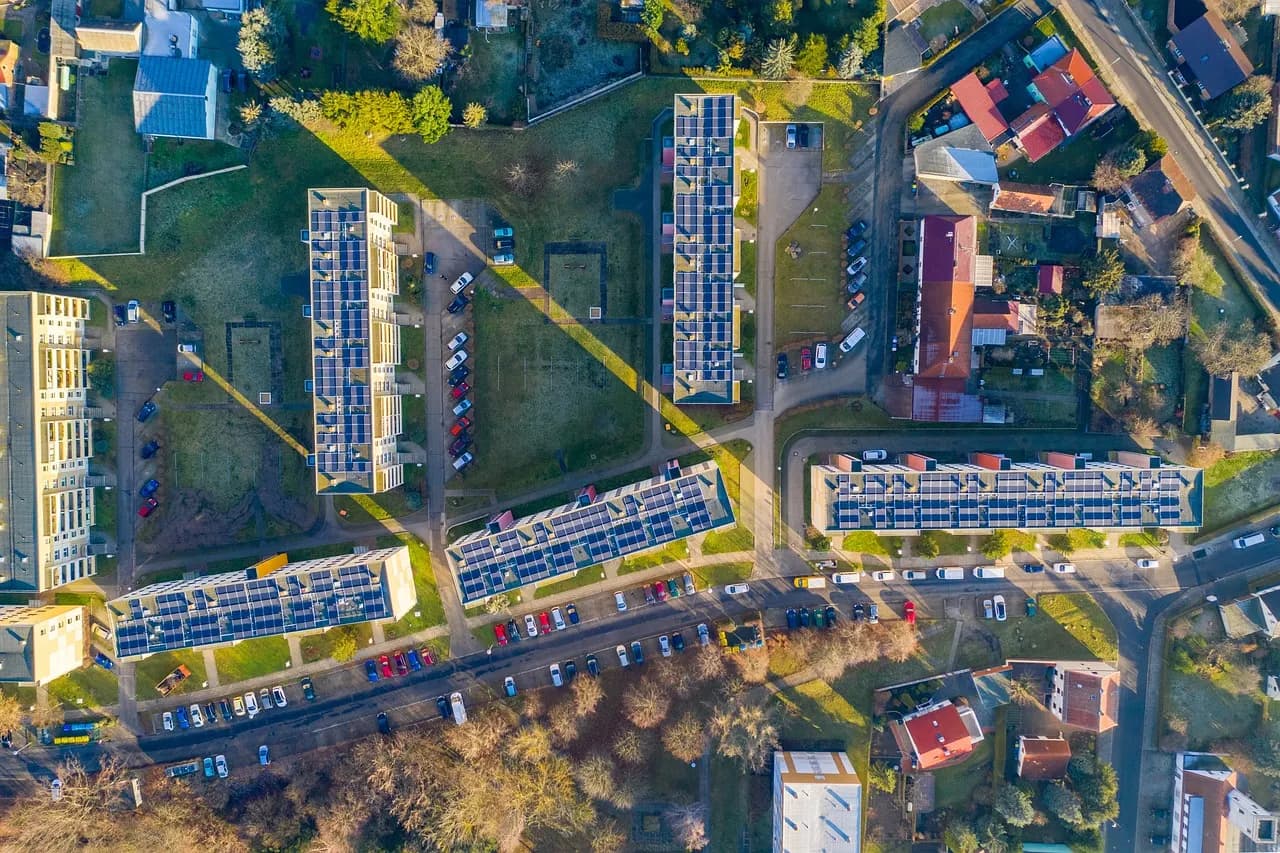
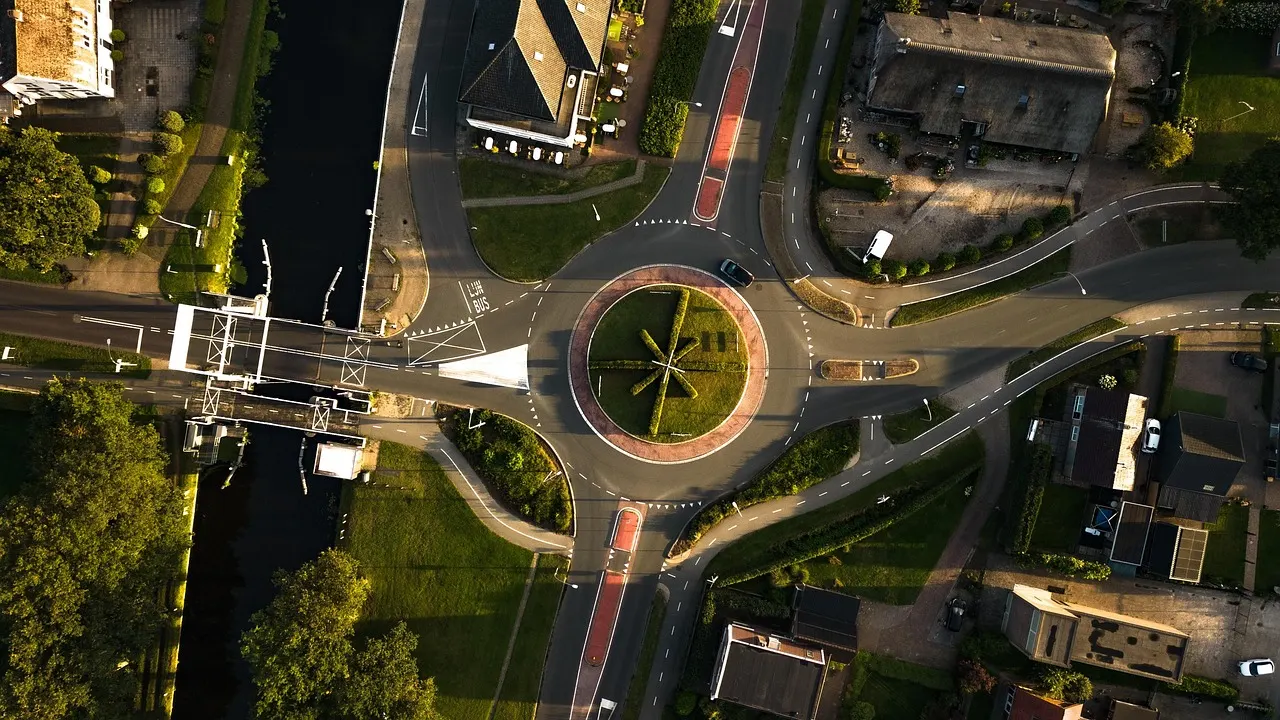
An aerial shot answers questions a ground-level photo cannot: where is this, what surrounds it, and how big is it really? For a home buyer, a hotel guest or an investor, those are usually the first three questions. That is why drone footage is no longer a flourish at the end of a video. Used well, it shortens the path from first impression to enquiry.
This guide is for business owners and marketing managers weighing a drone shoot. It covers where aerial video pays off, how to prepare, which rules apply, and how to turn a single day of filming into weeks of advertising material.
Why aerial, not just ground cameras
A ground camera shows detail. A drone shows context. Combine the two and you get a story that moves from the wide view to the specific product or space, which mirrors how people actually decide: location first, then square metres, rooms or the offer itself.
The second reason is attention. On Instagram and Facebook, the first two seconds decide whether someone keeps watching. A shot descending towards a building, a beach or a stage stops the scroll far more reliably than a static photo of a facade.
Industries that benefit most
Real estate
For apartments, houses and land, aerial footage is close to essential. Buyers want to see how far the property is from schools, parks, main roads and the city centre, and the fastest way to show that is from above. For new developments, filming the site through each construction phase builds trust and gives you a reason to post every few weeks.
For Kvart Nekretnine we filmed more than 30 properties, some of them by drone, and that footage now powers the bilingual kvart.ba website. See the Kvart Nekretnine case study. For a sense of how efficient a targeted property campaign can be, the Academy Residences campaign reached 110,000 views and 55,000 unique people in 28 days, generating 23 enquiries for €49 in spend. We cover the wider sales picture in our real estate marketing guide for Bosnia.
Hotels and tourism
Guests do not book a room; they book a destination. A drone shows the pool against the mountain, the terrace against the lake, the distance to the ski slope or the old town. For hotels and travel agencies, one strong summer shoot and one winter shoot can carry an entire season of advertising.
Construction
Construction companies get two uses from one flight: marketing, by showcasing completed projects, and documentation, by tracking progress for investors. Because the same footage serves sales and operations, the cost is effectively shared between two budgets.
Events
At conferences, festivals and sports events, a drone captures scale: the crowd, the venue, the atmosphere. That footage is the strongest argument for next year's edition and for sponsors. For indoor venues, ask honestly whether a drone makes sense at all, as safety constraints tighten considerably.
Retail and venue openings
An opening lasts one day; the content from it should work for months. An aerial shot showing the location, parking and the crowd on opening day performs well in location-targeted ads, because locals immediately recognise where the new store or restaurant is.
What to plan before the shoot
The most expensive mistake in drone filming is not a bad shot. It is flying without a plan. Before the shoot day, settle the following:
- Goal and channel. Is the video for ads, the website, investor decks or social media? That determines length, pacing and format.
- Aspect ratio. If footage is destined for reels and stories, frame with vertical crops in mind. Cropping a wide shot into vertical after the fact often cuts out the very thing that mattered.
- Shot list. Define the approach, the orbit around the building, the top-down view, the location reveal and the transition into ground footage.
- Time and light. Early morning and late afternoon give softer light and longer shadows. Wind and rain can ground the drone, so always book a backup date.
- Site and surroundings. Check proximity to airports, military and government sites, power lines and tall buildings. This affects both permissions and safety.
- People on site. Agree who the on-site contact is, who opens the premises, who informs residents or staff, and who appears on camera.
- Ground footage. Aerial shots rarely sell on their own. Plan interiors, details, people and short statements for the same day.
- Distribution plan. Know in advance how many cuts you need and where each will run, so the crew covers everything the edit will require.
Rules to respect
Flying a drone commercially is a regulatory matter, not only a technical one. In Bosnia and Herzegovina the responsible authority is the Bosnia and Herzegovina Directorate of Civil Aviation (BHDCA), and its current rules on registration, pilot competence and permissions should be checked before every commercial shoot. If you operate elsewhere in Europe, the framework set by EASA for the open category caps flights at 120 metres and requires the pilot to keep the drone within visual line of sight.
Whatever the local details, these principles always apply:
- Restricted zones. Around airports and sensitive sites, flying is prohibited or needs special approval. Check this before agreeing a date, not on location.
- People and privacy. Avoid flying over gatherings and filming private gardens, windows or identifiable people without consent. At events, let attendees know in advance that filming will take place.
- Owner consent. Taking off from or landing on private property requires permission from the owner or manager.
- Insurance and liability. Ask your supplier who is liable if something goes wrong and whether they carry insurance.
- On-site safety. A serious pilot will cancel when wind, rain or crowds demand it. That is not unprofessional; it is a sign you hired the right people.
If a supplier cannot clearly explain how they handle these points, find another one.
How one shoot becomes ads and reels
A well-planned shoot day delivers a content package, not a single video. A mix of aerial and ground footage can be edited into several formats, each with its own job in the campaign.
| Format | Length | Where it runs |
|---|---|---|
| Hero video | 60–120 seconds | Website, YouTube, presentations |
| Ad cut | 15–30 seconds | Meta and Google ads |
| Reel or short | 7–20 seconds | Instagram, TikTok, Facebook |
| Story version | 5–15 seconds | Stories, retargeting |
| Aerial stills | static | Ads, property portals, print |
A few principles make the footage work in paid media:
- Hook in the first two seconds. Your strongest aerial shot goes at the start, not the end.
- Multiple variants. The same footage cut with different openings lets you test and quickly find the version that drives enquiries.
- Captions and on-screen text. Most people watch muted, so the key message must be visible.
- A clear call to action. A video without a next step, whether a call, an enquiry or a visit, ends up as nice content with no results.
This way one shoot day can feed ads and organic posts for several weeks, with periodic re-edits when performance starts to fade.
Common mistakes
- Filming without a clear objective, leaving the editor nothing to build an ad from.
- Aerial shots only, with no interiors, details or people.
- A three-minute video nobody watches to the end.
- Ignoring vertical formats.
- Checking the rules on the day of the shoot.
The bottom line
Drone footage pays off when it is part of a plan, not a standalone effect. Location, scale and atmosphere are exactly what buyers look for, and a drone shows them faster than any copy can. At BIHMARKETING, drones are part of our full video production service, from shot planning to ad-ready edits.
If you want to know how aerial footage would fit into your marketing, start with our free AI brand analysis or give us a call, and we will work out together what is worth filming for your business.