Nobody buys an apartment because they saw one ad. Property buyers spend weeks, often months, browsing, comparing, talking to family and running mortgage numbers. That is why real estate marketing is not a single campaign but a system: content that earns attention, a page that persuades, a form that captures the contact and a process that turns that contact into a viewing.
This guide walks through the five parts of that system as we build it for agencies and developers in Bosnia and Herzegovina. The examples come from our own work with Sky Nekretnine, Kvart Nekretnine and Academy Residences. The principles apply to any market where buyers are local, diaspora or foreign investors.
Why a listing portal is not enough
Property portals are useful, but everyone competes there with the same tools: a handful of photos, a price per square metre and a description. Buyers end up comparing you on price alone. Once you own your video, your landing page and your contact database, you stop being one listing among hundreds and become a source buyers come back to.
The goal is simple: buyers should remember you, not just the apartment.
1. Video: drone footage and walkthroughs
A photo shows a room. A video shows what it is like to live there. For property, that difference matters more than anything else.
Aerial footage
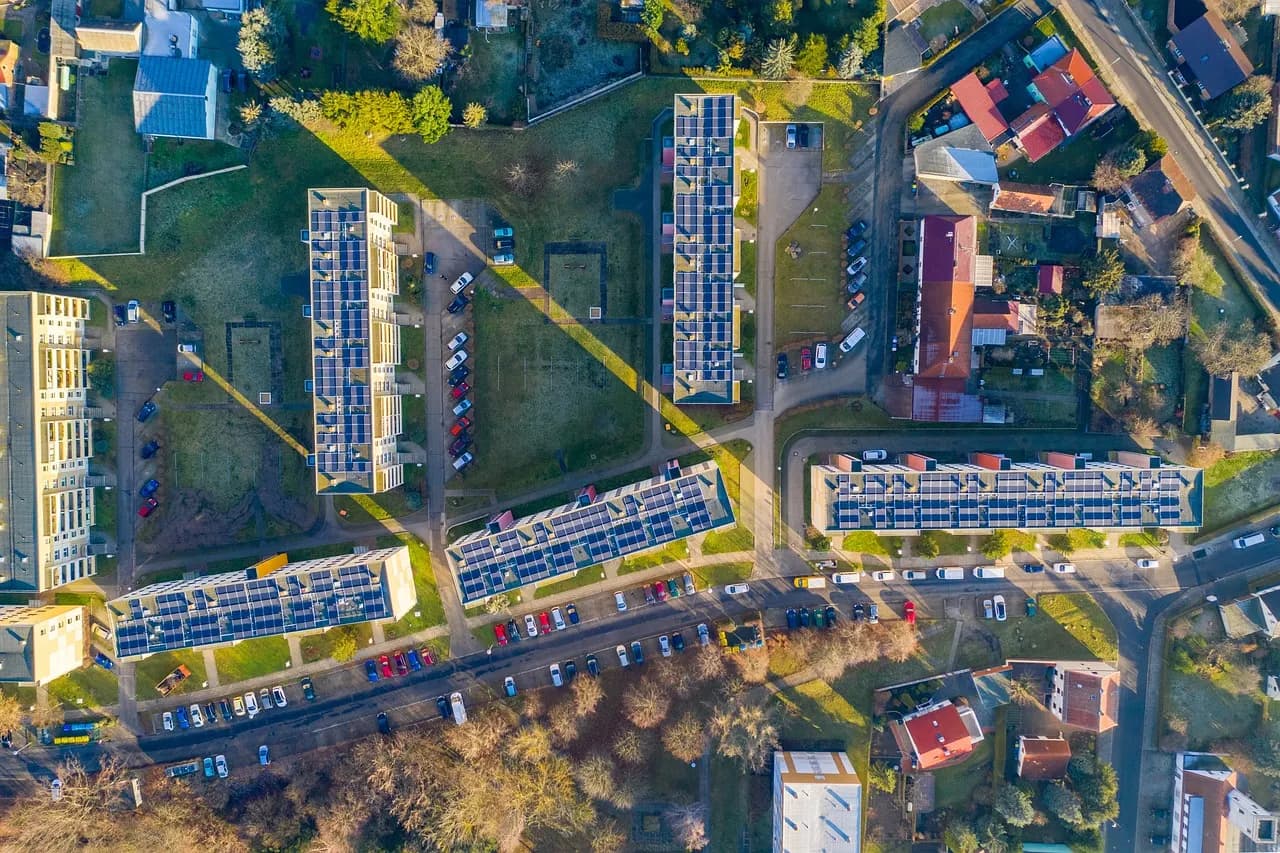
A drone answers questions photos cannot: how far the building is from the school, what the view looks like, where parking is, what the neighbourhood feels like. For new developments and off-plan projects, aerial footage is often the only way to show the location before the building exists.
For Kvart Nekretnine we filmed more than 30 properties, several of them by drone. The footage did not just go to social media; it also powers the bilingual kvart.ba website, where every property has its own visual story. See the Kvart Nekretnine case study for details.
Walkthroughs
The second essential format is a calm, continuous walk through the space: entrance, living room, kitchen, bedrooms, balcony. No aggressive music, no rapid cuts. Buyers want to understand the layout, not watch a music video.
Practical rules:
- Shoot in daylight, lights on, curtains open.
- Prepare the space: remove personal items, cables and excess furniture.
- Film the surroundings: building entrance, lift, street, nearest shop.
- Plan vertical and horizontal versions on set, not in the edit.
If you lack the equipment or the time, this is a job for professional video production with drone capability.
2. Reels: short formats for reach
One shoot should produce several short videos of 15 to 40 seconds. Reels on Instagram and Facebook drive reach and recognition, not direct sales.
Formats that work:
- "What you get for X" – a quick tour with the price up front.
- One detail – the terrace view, the kitchen, the walk-in wardrobe.
- The location in 30 seconds – drone shot, then on foot to nearby amenities.
- Agent on camera – a short explanation of why this property is a good buy.
An agent on camera builds the kind of trust a logo cannot. Sky Nekretnine went further and launched SkyPodcast, a three-episode series in which the team talks about the market and the buying process. Content like this convinces buyers they are dealing with people who know the business.
3. Landing pages: where decisions get made
A reel sparks interest, but a serious buyer wants more information. Send them to an agency homepage with 200 listings and you have lost them.
Build a dedicated page for each project or key property with:
- A headline with location and the main benefit (e.g. "Two-bedroom flat, five minutes from the tram").
- Video at the top – drone or walkthrough.
- Floor plan, size and price – hiding the price cuts serious enquiries.
- A map of nearby amenities.
- One clear action: book a viewing or call.
- Fast mobile loading, because most visits come from phones.
If you sell to foreigners or diaspora buyers, the page must be bilingual, like kvart.ba. Someone browsing from Vienna or Stockholm will not fill in a form they cannot read.
4. Meta lead forms: contacts without leaving the app
Lead forms on Facebook and Instagram let buyers leave their details without leaving the app. Name and phone number are prefilled, so the effort is minimal. That is why they are often the cheapest route to an enquiry.
The trick is not to make the form too easy. Ask only for name and number and you will get plenty of contacts, many of them not serious. Add one or two qualifying questions:
- When are you planning to buy? (now / 3–6 months / just browsing)
- How will you finance it? (cash / mortgage / selling an existing property)
- What size are you looking for?
Your team then knows who to call first.
The clearest proof of how efficient this can be is our campaign for Academy Residences: in 28 days it generated 110,000 views and 55,000 unique reach, and 23 enquiries for €49 in ad spend, just over two euros per enquiry. Read how the campaign was set up.
Keep targeting simple: a radius around the property plus the cities your buyers come from, a realistic buying age range, and let the algorithm and strong creative do the rest. More on our approach on the Facebook and Instagram advertising page.
5. Follow-up: where the sale actually happens
This is where most agencies lose money. A lead arrives on Friday evening, someone looks at it on Monday, and by then the buyer has already spoken to a competitor.
The rules we apply:
- Call within an hour during working hours. The faster you call, the more likely the buyer still remembers the ad.
- An instant automated message (SMS, Viber, WhatsApp or email) with the landing page link and the name of the agent who will call.
- One spreadsheet or CRM for every contact, with a status: new, called, viewing, offer, closed.
- Five contact attempts before you mark a lead as dead.
- Retargeting for anyone who did not respond: show them a new video of the same property or a similar listing.
Buyers who answered "in 3–6 months" are not lost. Put them on a monthly new-listings update. Part of your sales will come from this group, sales you might not credit to the campaign even though they are its result.
The full system at a glance
| Stage | Format | Goal | What to measure |
|---|---|---|---|
| Attention | Reels, drone video | Local reach | Reach, video views |
| Interest | Landing page | Informed buyer | Time on page, call clicks |
| Contact | Meta lead form | Qualified enquiry | Cost per lead, share of serious leads |
| Sale | Calls, messages, retargeting | Viewing and offer | Viewings, closed deals |
Sky Nekretnine shows what happens when every part works together: 88,000 people reached in Sarajevo over three months, more than 170 enquiries and a 290.54% ROI in Q2. The full approach is in the Sky Nekretnine case study.
Common mistakes
- Dark phone photos. The first impression is the only one.
- "Price on request". You attract the curious, not buyers.
- Ads pointing to the homepage instead of the specific property page.
- Leads not called the same day.
- Measuring likes. What matters is enquiries, viewings and sales.
- Switching campaigns off after two weeks. Property sales take longer, and the system has to run longer too.
Where to start
If you have none of this in place, do not try to build everything at once. Start with one project or one key property: shoot a drone video, build a landing page, launch a lead form on a modest budget and set a rule that every contact gets a call the same day. Once you see your cost per enquiry and number of viewings, you will know how far it is worth scaling.
Want to know where your agency or development is losing buyers right now? Run our free AI brand analysis or book a call, and we will go through your current marketing together and suggest the first concrete steps.